Windsor is current reviewing it’s Community Improvement Plans (CIPs) and it has a bunch of them! A full list of all of the city’s development incentives are available and to provide extra context the following are summaries of the existing CIPs created by the City:
- Brownfield Redevelopment CIP
- Downtown CIP
- Economic Revitalization CIP
- Ford City CIP
- Main Street CIP
- Sandwich Town CIP
- University Ave and Wyandotte St W CIP
There is a virtual open house on July 8th you can register for and there is also an online survey that you can do, which also closes July 8th so if you have thoughts or comments, still time to share.
What is a CIP?
A Community Improvement Plan (CIP) in Ontario is a formal planning and economic development tool enabled by the Ontario Planning Act. Municipalities use CIPs to designate specific geographic areas—called Community Improvement Project Areas—and establish a targeted vision for redevelopment, rehabilitation, and revitalization. Through this framework, councils can offer financial incentives such as grants or tax assistance to private property owners or developers, which would otherwise be prohibited without a CIP. These tools are used to promote a wide range of objectives, including main-street beautification, affordable housing, heritage conservation, brownfield remediation, accessibility improvements, green space enhancement, and tourism development.
As outlined above Windsor has a whole range of CIPs most of which are focused on certain parts of the City (the Core) and providing incentives for certain kinds of activities – facade improvements; development fee waivers; incremental tax grants, etc. These programs have been the “workhorses” of revitalization efforts and development incentives in different parts of the city at different points in time. Almost no major industrial project in the City doesn’t receive some sort of benefit from CIPs while certain neighbourhood based projects have also benefited.
Why should you care?
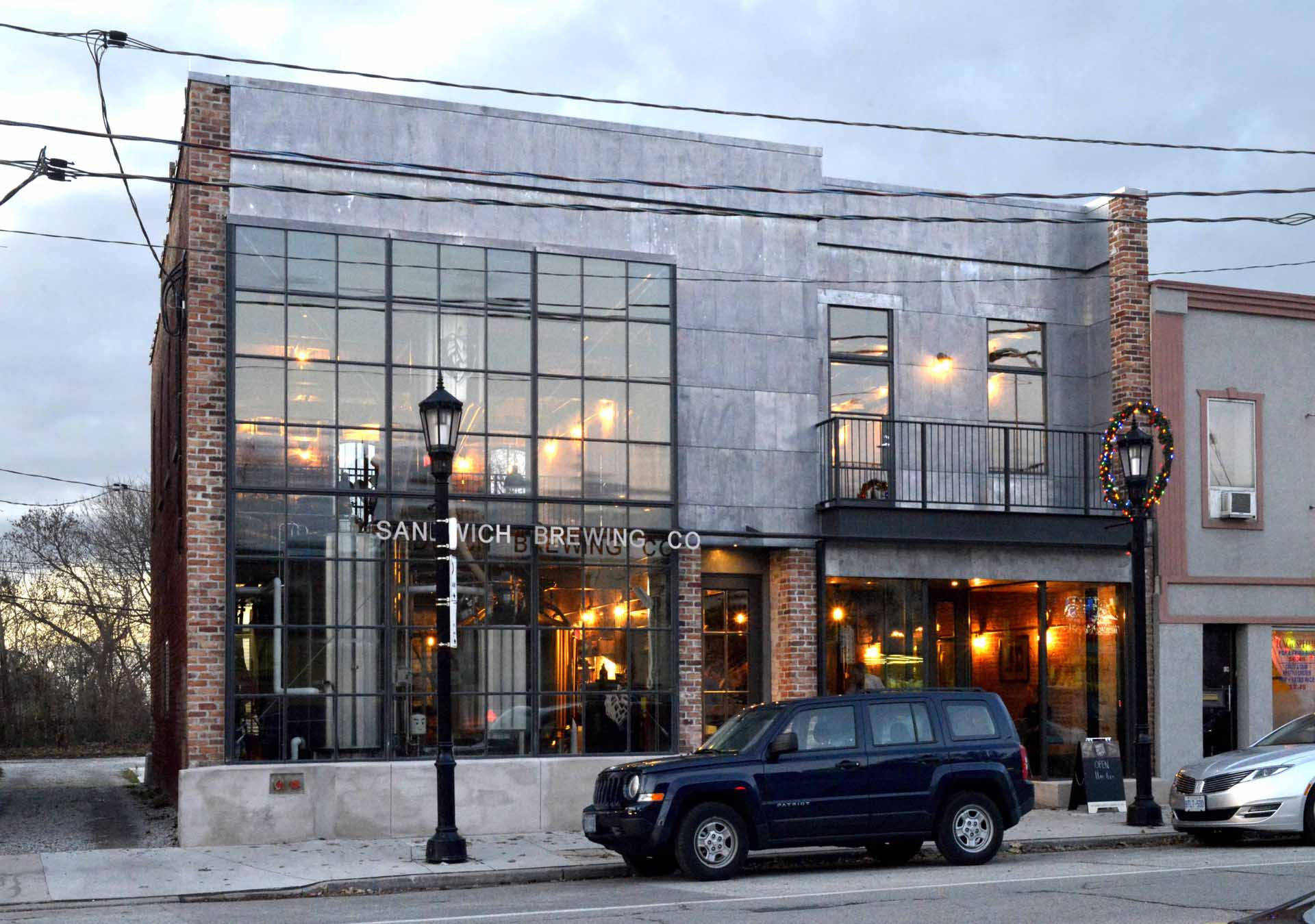
The incentives offered through a Community Improvement Plan (CIP) are often what make the difference between a project moving forward or sitting on the shelf—especially in older, built-up parts of the city where construction costs are high and profit margins are tight. Whether it’s helping a small business restore a historic building like at Sandwich Brewery, deferring property taxes for a decade on a “generational investments” like the Battery Plant, or supporting mixed-use residential developments downtown, CIPs are the behind-the-scenes tool that help unlock these types of investments.
Without these financial incentives, many infill or redevelopment projects simply wouldn’t happen. That’s because building in established neighbourhoods often comes with higher costs—like demolition, environmental cleanup, or upgrading aging infrastructure—that developers don’t face in greenfield areas. CIPs help level the playing field, making it more attractive to invest in the core of the community, where growth can be more sustainable, efficient, and aligned with city goals. In some communities there are some new programs that also target existing residents in certain cities that incentive them to improve or upgrade their properties. Overall, CIPs means more housing options, more vibrant neighbourhoods, and better use of existing public infrastructure—all driven by targeted municipal investment.
What should come from this?
I think there a few things missing from the current CIP framework and discussions.
Make them City Wide
Currently we have a number of CIPs targeting certain parts of the city leaving other parts without incentives. Arguably this is because certain neighbourhoods need support but it also leaves other parts of neighbourhoods without incentives and creates additional barriers to applying as a property owner has to determine if their lot is on the right side of the line. This fragmentation continues as certainly programs overlap certain localized CIP areas so the Mainstreet Façade Improvement Grant in captured in the Ford City or Sandwich CIPs but also available in designated areas city wide and in all BIAs.
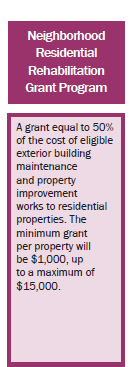
Finally, there are some niche programs like the Neighbourhood Residential Rehabilitation Grant which is only available in the Ford City CIP area (that I could see), thus not available to the rest of the City. Certainly I suspect there are residents and developers in other parts of town that may want to take advantage of a grant to improve exteriors of their properties. There are heritage properties that are across the city that could benefit from this.
Additionally the City has changed it’s planning philosophy to a degree over the last few years as a result of the Housing Crisis and funding to HAF.
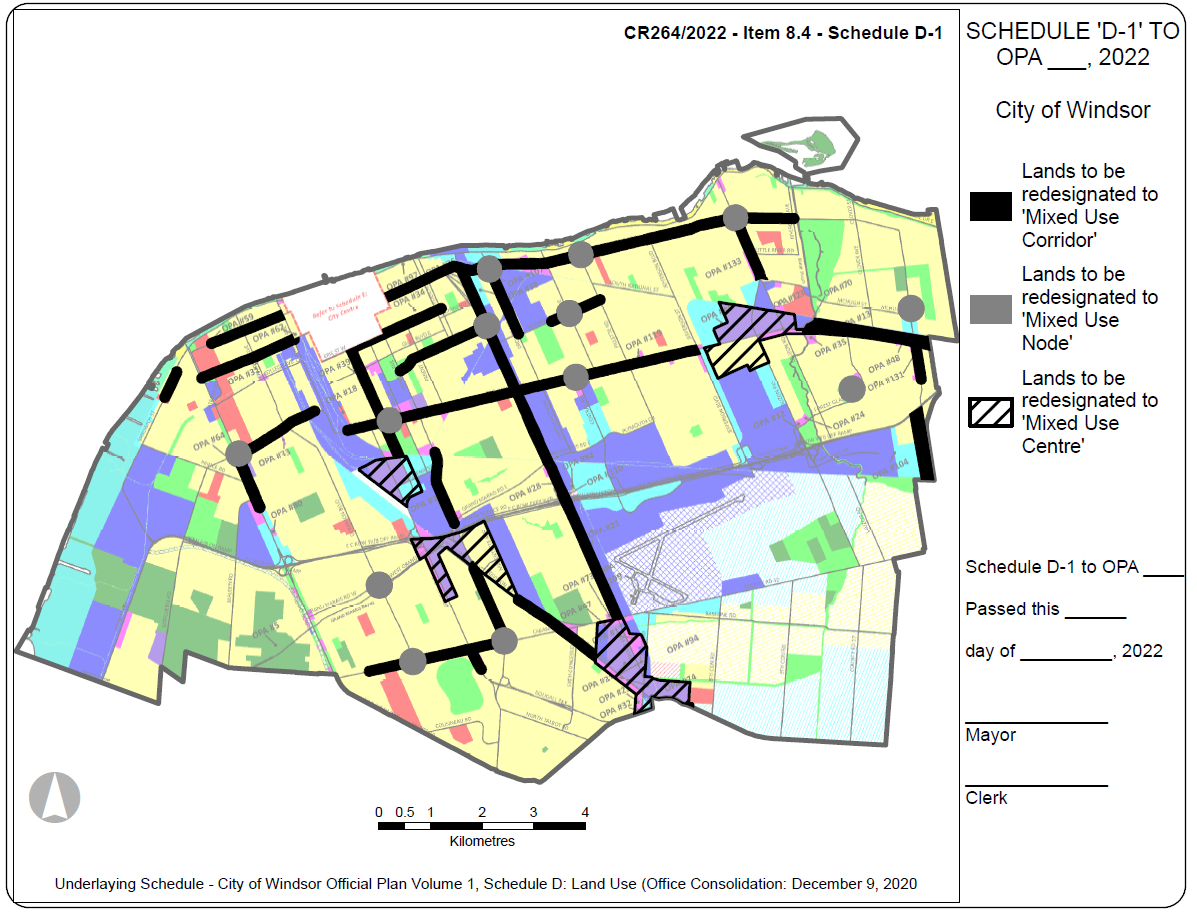
The node and corridor model of development that the city proposed for development moving forward likely needs to re-imagine how CIPs are deployed. If we want to drive development to the nodes ensuring that there are generous incentives to redevelop these areas will be key. If we don’t want 10 story apartment buildings in neighbourhoods then CIPs should target these areas to ensure that they end up there. But that doesn’t mean we shouldn’t consider programs to impact neighbourhoods across the city.
Make it Easy
The adage of KISS (keep it simple stupid) seems to apply to me. The goal of CIPs are to encourage development – making the process to apply, and get the incentive difficult runs contrary to the goal. Onerous application and review processes are also trying on staff resources, particularly if a CIP in demand. KPI should be assigned and publicly reported about how long it takes to get a CIP application approved, and funding released as the sooner the funds are released it can help developers in tight market conditions.
ADU/ARU Incentives
CIPs generally are targeted to developers but a number of municipalities are giving residents opportunities as well. City-wide CIPs to incentivize ADUs. Some quick googling found these grants in some of our neighbouring municipalities.
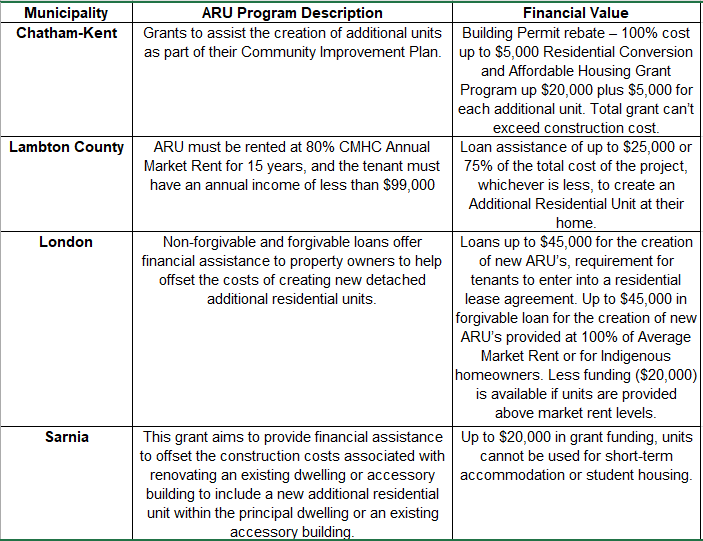
CIPs are generally accessed by developments but ADU/ARU development generally happens because a homeowner wants to do it. The City should be encouraging it’s residents to add gentle density to existing neighbourhoods. Councillor Kieran Mackenzie did propose this in 2023, nothing has come from it to date.
Affordable Housing CIP
Although there is a new Residential Development Grant Program within many of the existing CIPs there is not City wide grant at least as articulated in the summary documents, there is nothing to encourage the development of affordable units. Like ADU above, the city does not have an explicate Affordable Housing CIP.
This is a massive gap in our community! We are currently carrying out expressions of interest on properties across the city, yet no structured incentive programs to encourage developers to ensure affordability of developments that hopefully eventually go there. Often these affordability programs stack on top of standard residential development incentives ensuring that the math works for developers to sell or rent units at the lower than market price, while the municipality keeps track of the units rents and sets affordability levels. Almost every larger city in the province has some form of Affordable Housing CIP and Windsor’s lack of program – a legacy of our “cheap housing market” – is a definitely gap that needs to be filled.
Residential/Community Incentives
ADU/ARUs are interesting CIP case as they often benefit private residents not just a developer. The city has tried programs like the residential neighbourhood improvement grant and although I am not sure the uptake ensuring there is a pathway for average people to engage City programs is important.
CIPs could also be used to support or encourage mural and public art projects on developments, solar panel installations and other energy efficient retrofits/renovations; storm water mitigation programs – like storm gardens, green roofs, cisterns and permeable pavement. There is a lot of space for incentives to be targeted to average residents- where a $5,000 grant could turn dozens of driveways into storm water retaining surfaces. There is nothing stopping these incentives from being impactful and helping build up our community in big and small ways beyond our imagination.
Offers they can’t refuse

Although a range of CIPs with a suite of incentives are likely forthcoming ensuring that they are generous enough to overcome local market conditions is vital. For better or worse and often overlooked in some quarters – development is a math problem.
Ensuring the incentives through the CIP are generous enough to make a project viable is critical but also needs to be balanced with ensuring the funds set aside to support the ongoing use of the grant.
This year St Catharine’s launched and ADU grant program with up to $80,000 for property owners to build a detached additional unit. The amount, one of the most generous in the province, was exhausted in a matter of weeks. From my understanding dozens of ADUs are now in the pipeline to be built this year as a result. So what does Windsor want? Apartments, missing middle housing, row housing, ADUs? There is no reason why we can’t have certain incentives be generous to create the city we want.
Sum up
The CIPs have the potential to dramatically reshape the City of Windsor. So I would encourage you to complete the survey and listen to the webinar next week.
A report will likely come to council in the fall summing up these consultations and making final recommendations around what sort of incentive Windsor “wants” and “needs” so keep an eye open.
 gingerpolitics
Excellent and timely. Sharing with our new staff at United Way for the Neighborhood Programs and the CAN members!
As you’re now running for Council, I’m sharing this on West Windsor Bulletin Board. Door-to-door canvassing is great, but to reach more people, I’m hoping you’ll consider more entries in your blog. Some of us in Ward 2 know who you are, but many don’t. Best of luck. 🙂
Thanks so much for comment!
I am running for Council! Thanks for sharing all we can do is getting the word out. Follow my campaign on Facebook and Instagram. There will be a separate campaign site that will launch soon where all of those ideas and policy positions will be posted!