I have written a fair bit about poverty and income inequality in Windsor-Essex. This past Friday’s labour force survey highlighted that our region has the highest unemployment at 7.1% in Canada (again). I did a short media hit with Dale Molar for CBC News (11:21 mark of the news) about a piece of information buried in that report.
Buried in that survey was an interesting sub-question about financial strain. To my understanding this isn’t a normal question that is regularly highlighted in the Labour Force Survey as it is identified as a custom tabulation. This snapshot on financial strain is important to understand not only how the labour force is feeling at a point in time but also giving data points on the overall economic mood of workers or people who want to work.
Based on the findings 1 in 3 Canadians are facing difficulty or very difficult meeting their financial needs. When we look at the percent of respondents with financial difficult across the 20 largest CMAs you find this:

Ontario CMAs dominate the regions with the highest levels of difficult or very difficult financial situations. Windsor’s unemployment rate may have something to do with it, but also factors like housing and rental affordability – particularly in the context of household income levels being somewhat stagnant. Couple this, with reporting on Food Bank usage you can see how these issues are manifesting in our region. To relieve some of the pressure that families are facing they are leveraging community resources.
What this doesn’t mean is that 41% of people in Windsor Essex are about to lose their home or that they are living in low income. A question around financial difficult is subjective in many ways and only captured individuals participating in the labour force survey. So some of the responses could have come from two income households making $200k but they are still feeling financial strain, others are from people struggling with unemployment. That being said, the clustering of SW Ontario CMA near the top of this data does point to some regional disparity in financial confidence.
Where this data really comes to light in when it is triangulated with other information, like local polling.
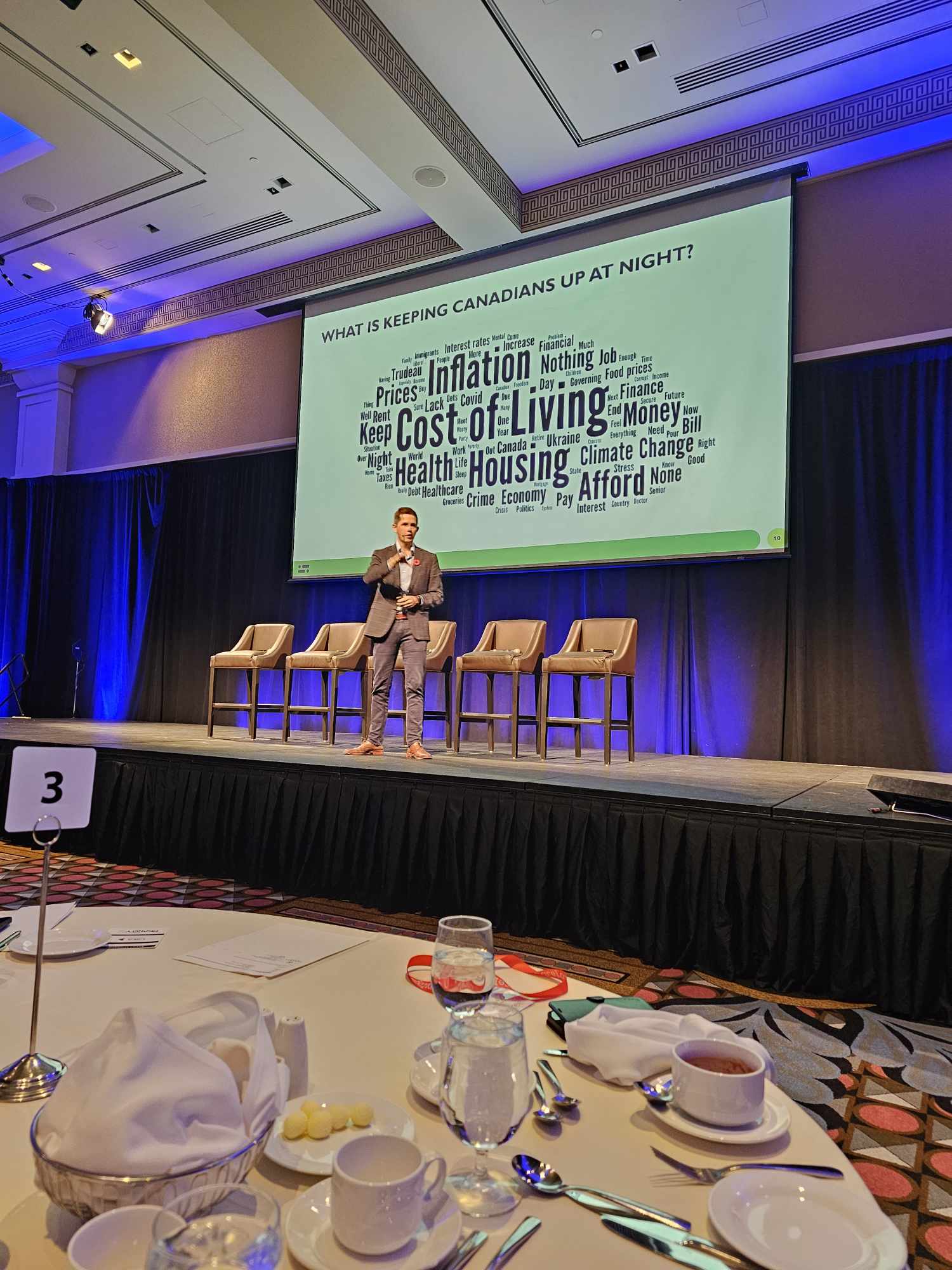

The images above are floating around online and are from the WECAR lunch on Friday November 3rd. As part of this lunch David Colletto from Abacus Polling presented data from the Windsor-Essex region around housing and affordability. From my understanding a full report is forthcoming that will show the full results – here is some news coverage.
Squinting at the images you see, first a word cloud of the issues that “keep Canadians up at night” the words: Cost of Living, Inflation, Housing, Afford all top the list. In the second image, which asks local respondents which issue elected officials should focus most on. Housing accessibility and affordability as well as the Cost of living both break 50%. Then there is a 20 point gap between those responses and items like Healthcare, Homelessness and Drugs/Mental Health.
On November 6th Living Wage Ontario published their new rates for across the province. For context, the minimum wage in Ontario is $16.55 per hour.
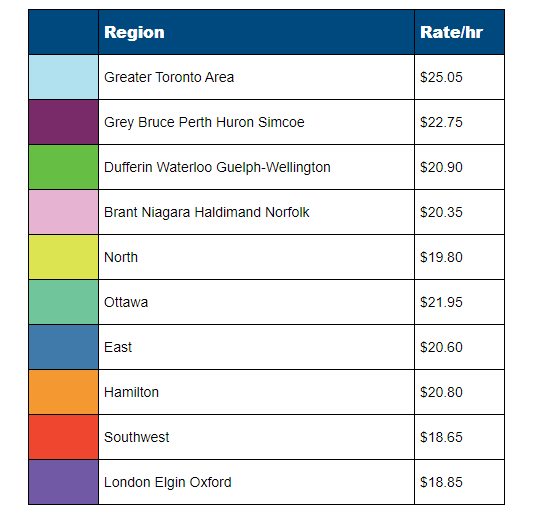
The living wage is a calculation with assumptions around what it costs a family of 4 to not only cover all the necessities but also some additional social or community activities/ With a $2.10 gap between the min wage and the cheapest living wage you can see why people might be feeling financial pressure, particular in SW Ontario. Despite our lower cost of living compared to Toronto, wages are suppressed in comparison, and in turn there is less wiggle room when financial pressures rise. This may bare out a slower economy as we went the holiday season.
What we are seeing in the Statistics Canada data is the underlying uncertainty of people in the economy as we enter the holiday season. People are feeling the pressure! Unfortunately don’t know if Statistics Canada will ask this question again or when. So this will be a snapshot in time. We will have to see what next months labour force data shows as it is has been volatile in nature but my takeaway is that things are not that rosy on the economic front and people are starting to worry.
If you like posts like this sent to your email you can subscribe in the side bar.
 gingerpolitics